The Phylloxera Crisis
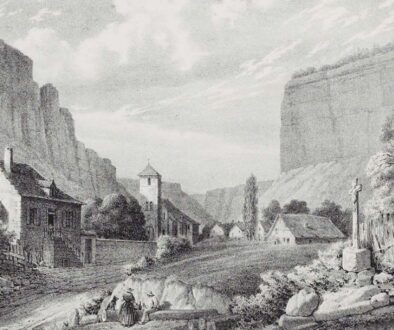
The Phylloxera Crisis that struck France starting in the 1860s was an unmitigated disaster for the small winemakers of Baume-les-Messieurs, serving as the single greatest catalyst for the village’s shift from a viticultural economy to a dairy-based one.
For the small, family-run estates in the Jura’s picturesque reculée (blind valley), the arrival of the root-feeding aphid, Phylloxera vastatrix, meant total economic collapse.
Financial Ruin and Loss of Livelihood
The most direct impact was the destruction of the vines themselves.
Traditional European vines had no natural resistance to the pest, and once infected, they were doomed within a few years.
-
Zero Income Shock: For small winemakers (vignerons), whose livelihood was entirely dependent on their annual grape harvest, the death of their vines meant their income dropped to zero. This created a massive income shock for wine-growing families, who had little access to credit or diversified wealth.
-
High Replanting Costs: The only successful remedy was to uproot the dead vines and replant them using American rootstocks resistant to Phylloxera, onto which the local Jura varieties were then grafted. This was a labor-intensive and expensive process—too costly for most small producers to afford after their primary asset (the vineyard) had been wiped out.
-
Increased Debt: Many small farmers, desperate to save their land, attempted costly, non-viable chemical treatments (like carbon disulfide injections) or repeated replantings with European stock, only to watch them fail, exacerbating their debt.
Forced Land Use Conversion
Unable to bear the cost and risk of replanting and facing the loss of their primary agricultural asset, small winemakers were forced to seek a more stable alternative.
This led to the fundamental re-allocation of land use in Baume-les-Messieurs:
-
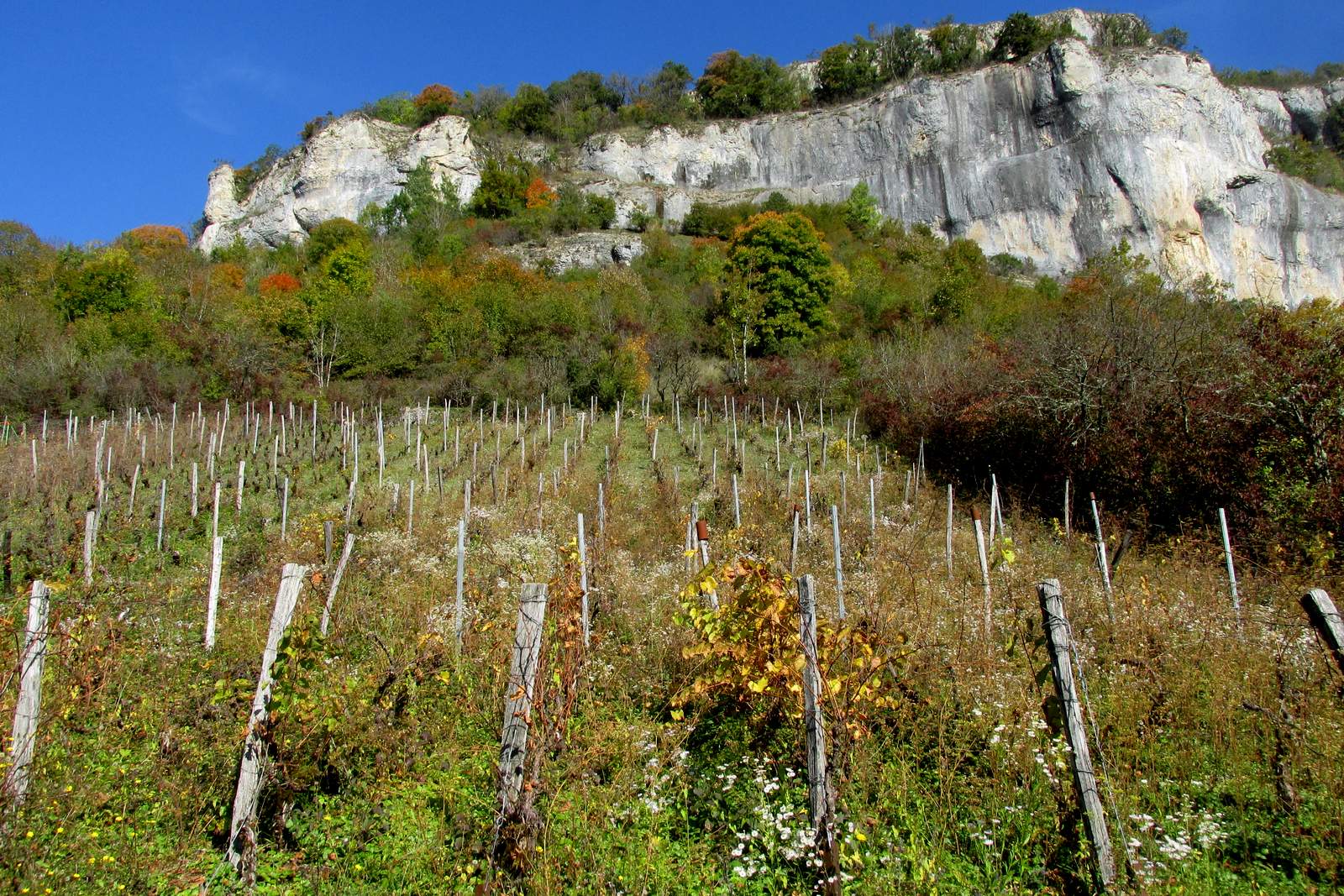
Abandonment of Slopes: The steeply terraced vineyards on the slopes, which required constant maintenance and were difficult to work, were often the first to be abandoned. Much of this land fell into disuse or was eventually reclaimed by forest.
-
Adoption of Dairy: Farmers shifted their focus to the valley floor, which, while less ideal for premium wines, was perfect for grazing cattle.
-
The rise of the cooperative fruitière (cheese-making facility) made dairy farming viable, as it allowed small producers to pool their milk to create the valuable, large wheels of Comté cheese.
-
Architectural Adaptation: The vast, cool cellars built for aging wine were perfectly repurposed for aging cheese.
-
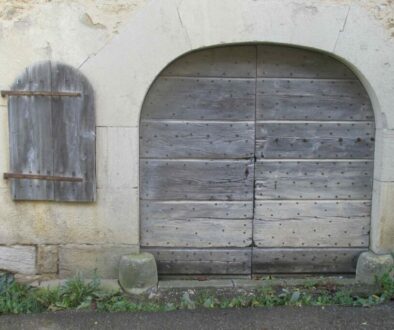
Ground-floor rooms previously used for wine presses were cleaned out and converted into stables (étables) for Montbéliarde cows, fundamentally changing the function of the village’s historic homes.
In essence, the Phylloxera Crisis was a harsh economic selection tool.
It bankrupted or forced out the small, specialized vignerons, clearing the way for a more robust, collective, and diversified agricultural economy centered on milk and cheese production that ultimately saved the village’s prosperity.
Key Facts About Phylloxera
Phylloxera (specifically Daktulosphaira vitifoliae, formerly known as Phylloxera vastatrix) is a tiny, aphid-like insect that is the most economically destructive pest of grapevines worldwide.
It is infamous for causing the Great French Wine Blight in the late 19th century, which devastated vineyards across Europe, including those in Baume-les-Messieurs.
- Origin
Native to eastern North America. - Appearance
An almost microscopic, pale yellow to brownish insect, related to aphids. Adults are typically less than 1 mm long. - Damage Mechanism
It feeds on the roots of grapevines, injecting venomous saliva that stops the roots from healing. This causes the formation of large swellings or galls (nodosities and tuberosities). - Impact on European Vines
The vast majority of European grapevines (Vitis vinifera) have no natural resistance. The feeding sites allow secondary fungal and bacterial infections to enter, eventually leading to root decay, girdling the root, and killing the vine entirely within a few years. - Impact on American Vines
North American grape species co-evolved with the pest and have defense mechanisms. Their roots form a protective layer of cork tissue around the feeding site, effectively stopping the infection and preventing the death of the vine. - Life Cycle
It has a complex, multi-stage life cycle involving both sexual and asexual reproduction. It can feed on both roots (the most damaging form) and leaves (creating small galls), though the root form is the one responsible for the devastation of European vineyards.
The Phylloxera Crisis occurred because when American vines were imported to Europe in the mid-19th century (often for botanical study or to find a remedy for powdery mildew), the Phylloxera pest was unknowingly transported with them.
When the pest encountered the highly susceptible European Vitis vinifera rootstock, it spread rapidly, wiping out between two-thirds and nine-tenths of all European vineyards. The ultimate solution was to graft the desired European wine-producing scions (the part of the vine that grows above ground) onto phylloxera-resistant American rootstocks—a practice that is still standard today for nearly all vineyards outside a few specialized areas.