The Architectural Transformation of Baume-les-Messieurs
The Napoleonic Era: A Village of Vines and Cellars
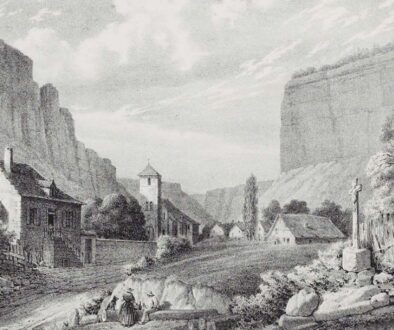
In the early 19th century, immediately following the French Revolution and during the Napoleonic period, Baume-les-Messieurs was, like much of the Jura, a vineyard-centric community. The region’s unique climate and terroir were perfectly suited for high-quality, long-aging wines (especially the famed Vin Jaune).
Land Use and Architecture (Early 19th Century):
-
Land Use: The steep slopes of the reculée (a deep, blind valley characteristic of the Jura) were dominated by terraced vineyards. Plots were often small, reflecting post-Revolutionary land division.
-
Architectural Features: The housing reflected the needs of winemaking:
-
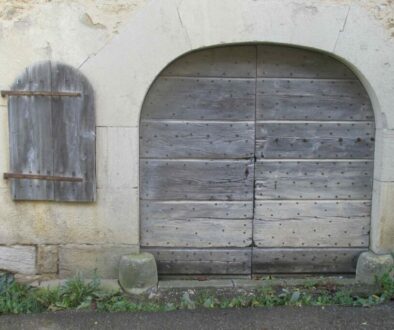
Vast Cellars (Caves): Houses were built directly into the slopes or featured massive, subterranean cellars with thick stone walls to maintain a cool, constant temperature essential for fermenting and aging wine.
-
Press Houses (Pressoirs): Many wealthier estates and communal buildings contained large rooms or separate structures to house the heavy, immovable wine presses.
-
Open Access: Buildings were often arranged to allow easy access for carts carrying grapes from the slopes for immediate pressing and fermentation.
-
The 19th Century Shift: The Dairy Revolution
The transformation began in the mid-19th century, driven by two major factors:
-
The Phylloxera Crisis (starting 1860s): This devastating aphid destroyed most of the French vineyards, including those in the Jura. The cost and difficulty of replanting forced many winemakers to abandon their crops.
-
The Rise of Fruitières: The cooperative dairy system, known as the fruitière, flourished in the Jura. Farmers pooled their milk to produce large wheels of cheese, most notably Comté. The cleared, flat valley bottom land, previously deemed too wet for vines, was perfect for grazing cows.
Land Use and Architectural Adaptation (Late 19th Century):
The economic focus shifted from the fragile, vine-covered slopes to the robust, grass-covered valley floor. This forced the existing buildings to adapt to new needs:
| Original Use (Winemaking) | New Use (Dairy Farming & Cheese) | Architectural Adaptation |
| Vast Wine Cellars | Aging Cellars (Caves d’Affinage) | Cellars were cleaned, sanitized, and structurally enhanced to hold large quantities of aging Comté or Morbier cheese. The constant temperature and humidity proved ideal. |
| Ground Floor Press House | Stables (Étables) or Barns | Large, open rooms previously used for presses were converted into stables for the Montbéliarde cattle, requiring improved drainage and ventilation. |
| Storage Attics (Greniers) | Hay Storage (Feniers) | The upper levels and attics were adapted to store massive quantities of hay and fodder needed to feed the cows through the long Jura winters. |
| New Construction | The Fruitière | New, often prominent, cooperative structures were built, featuring large receiving areas, processing vats (copper), and distinct aging cellars beneath. |
The most lasting architectural legacy of this change is the dual-purpose design seen in many traditional Jura farmhouses, where the human living quarters are nestled above the animal stables and the expansive hay loft, a direct response to the requirements of the dairy economy. Baume-les-Messieurs, therefore, serves as a poignant physical history book, showing where the vines once grew and how the houses learned to keep milk, not just wine.
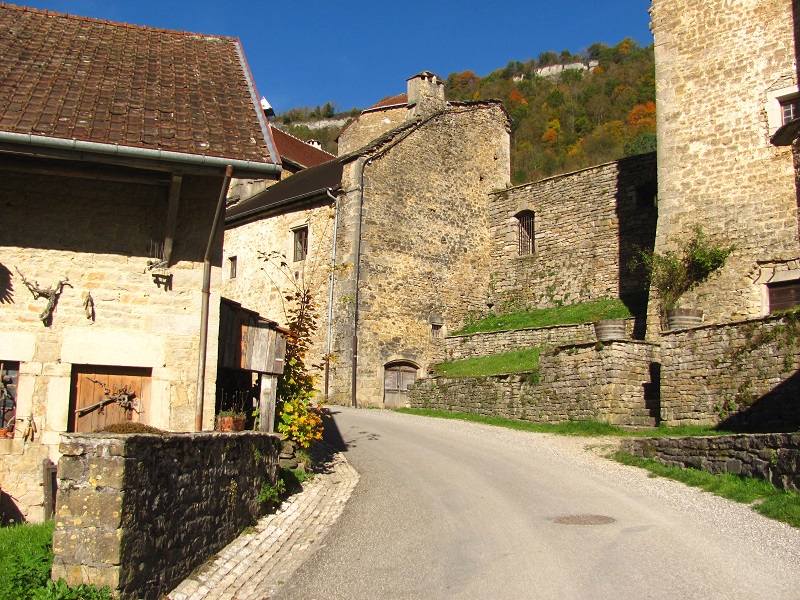
From winemaking to dairy farming
The picturesque village of Baume-les-Messieurs in the Jura region of France offers a fascinating case study in how economic necessity dictates land use and architectural adaptation.
Following the tumult of the Napoleonic era and throughout the 19th century, this settlement underwent a significant shift, transitioning from a community deeply centered on winemaking to one focused primarily on dairy farming and the burgeoning local cheese industry.
This change fundamentally reshaped the landscape and the very fabric of the village’s buildings.