The History of Baume-Les-Messieurs
Here is a short history of Baume-les-Messieurs (in the Jura department, Bourgogne-Franche-Comté, France) — its geography, origins, monastic importance, decline and modern revival.
Geographic & Natural Setting
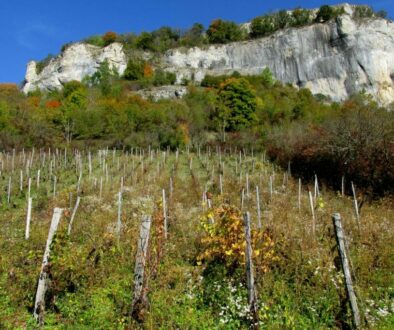
The village of Baume-les-Messieurs is located in the Jura department, in eastern France, in the region of Bourgogne-Franche-Comté. (Wikipedia) It is situated within a striking geological formation known as a reculée (a steep-walled valley culminating in a blind end) — specifically the Reculée de Baume. (Lons-le-Saunier Tourisme)
This natural amphitheatre of cliffs and limestone walls makes the site exceptional: the village lies at the bottom of this cirque, the source of the river Seille de Baume runs through, and the Dard emerges from caves at the head of the valley. (Wikipedia)
The geological setting shaped not only its scenic character but historically its access, isolation and suitability for monastic settlement.
Prehistoric and Early Occupation
Archaeological evidence shows that the site of Baume-les-Messieurs was occupied as far back as prehistoric times: there are traces of rock-shelters (abris sous roche) from the Neolithic, Gallo-Roman era remains, and protohistoric artefacts. (routes-touristiques.com)
Thus, the site was favourable early on — perhaps because of its sheltered nature, water sources, and defensible cliffs.
However, for much of its early existence it remained a remote settlement rather than a documented political centre.
Founding of the Monastery and Early Middle Ages
The monastic history of Baume-les-Messieurs is central to its identity. According to tradition, a Benedictine monastery (or an earlier monastic cell) was founded at the site in the late 6th century, perhaps by Saint Columbanus, though this is more legendary than firmly documented. (Wikipedia)
The first documentary mention of a “cella” at Baume dates from 869 (under King Lothaire II) and other records around 890. (bourgogneromane.com)
In about 888-890, the monastery is re-formed and entrusted to the abbot Bernon (abbé de Gigny initially), who becomes abbot of Baume. During his abbacy, around 910, he departs with six monks of Baume (and six of Gigny) at the request of William I of Aquitaine to found Abbaye de Cluny, which becomes one of the major monastic centres of medieval Europe. (Wikipedia)
Thus Baume plays a pivotal role in the early Cluniac reform movement of the 10th and 11th centuries. The monastery at Baume flourished in the 11th and early 12th centuries, attracting donations, benefactors and constructing significant buildings. (Wikipedia)
High Middle Ages – Flourishing and “Imperial” Status
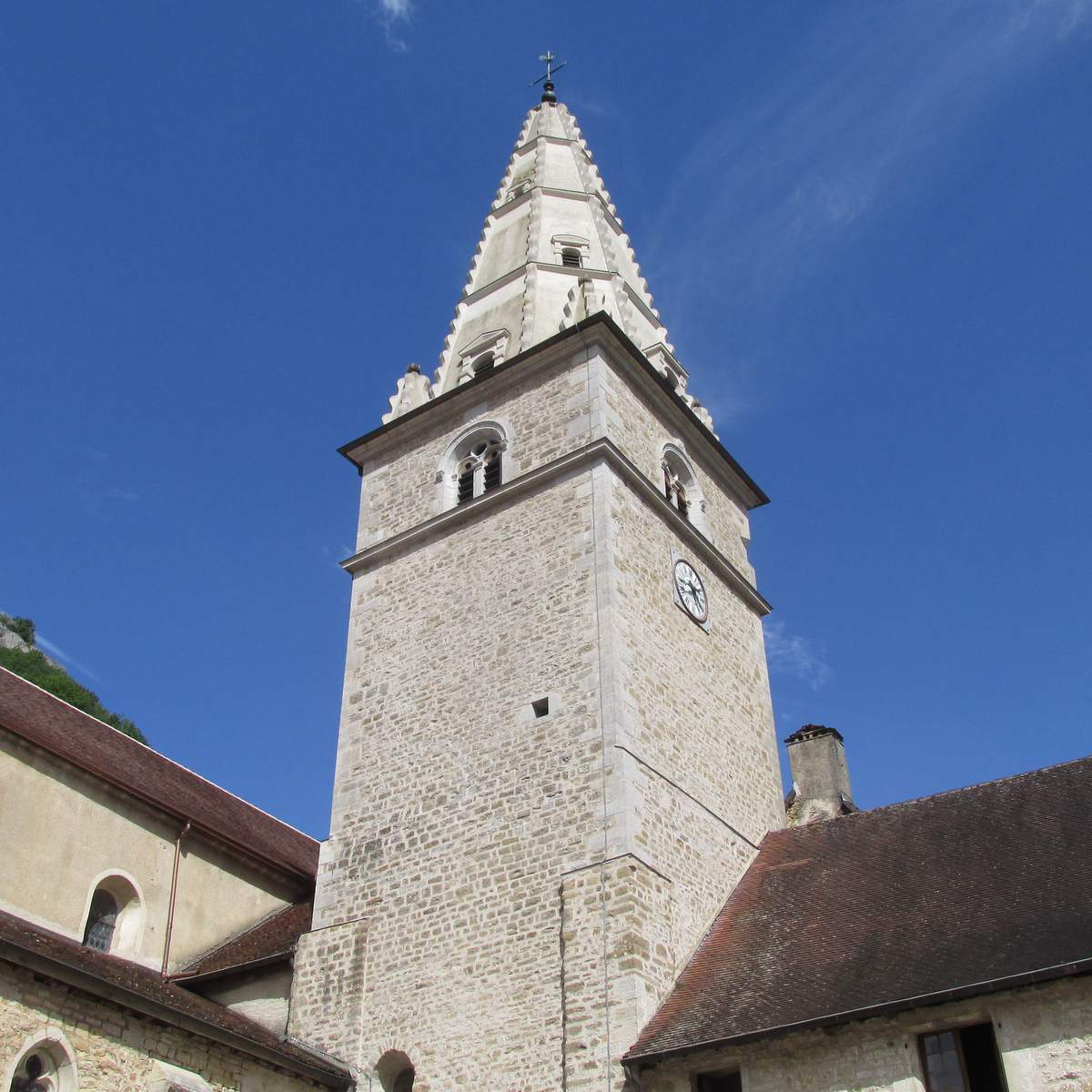
In the 11th century, the abbey of Baume undergoes substantial building works: the current Romanesque church (or large parts of it) is constructed around 1080-1139. (patrimoine.bourgognefranchecomte.fr)
In 1147, the abbey is officially brought under the authority of Cluny (the mother-house) by Papal decree, which marks the beginning of a gradual decline in its independence. (Lons-le-Saunier Tourisme)
In 1157 the title “abbaye impériale” (imperial abbey) is attributed, reflecting its important position and imperial patronage (e.g., by Frederick Barbarossa) which enhanced its prestige. (Le blog de Jean-Pierre Kosinski.)
The abbey acquired rich architectural fabric: the church with nine travées in the nave, cloisters, abbatial residences, donjon, etc. (bourgogneromane.com)
At this period Baume-les-Messieurs is at the height of its spiritual, cultural and economic influence in the region.
Late Middle Ages and Early Modern Period – Challenges & Decline
From the 14th century onward, the abbey begins to face difficulties: fires (for example in 1336 it was burned) and pillaging, including during the Hundred Years’ War period. (bourgogneromane.com)
In the 15th century, restoration is undertaken under Abbot Aimé de Chalon (1390-1437) in the Gothic style. (patrimoine.bourgognefranchecomte.fr)
But later, from the 16th century, the regime of commendatory abbots (abbreviated: abbés commendataires) begins: noblemen are appointed abbots in name but seldom reside; monastic discipline declines. (Le blog de Jean-Pierre Kosinski.)
Fires in 1520 and 1560 add to the architectural and institutional stress. (bourgogneromane.com)
At the same time, the name of the village begins to change: originally called Baume-les-Moines (in reference to the monks), by the 18th century, when the abbey has secularised offices for noble “messieurs”, the name Baume-les-Messieurs becomes used. (Magazine Belles Demeures)
The 18th & 19th Centuries – Secularisation, Revolution and Preservation
In 1759 the abbey is secularised: the monks become canons, and the building’s monastic function is effectively ended. (Lons-le-Saunier Tourisme)
With the outbreak of the French Revolution the abbey’s chapter is suppressed (1790) and the monastic buildings are sold off as national property. (bourgogneromane.com)
In the 19th century, increasing interest in heritage leads to the classification of the abbey church as a Monument Historique (1849) and further protections in 1862. (patrimoine.bourgognefranchecomte.fr)
The buildings evolve: the cloister is demolished in the early 19th century (1806/1865) and many monastic buildings become private dwellings. (bourgogneromane.com)
During this period the village’s beautiful and unique setting becomes appreciated for its scenery and heritage value, although tourism in the modern sense is not yet dominant.
20th & 21st Centuries – Revival as Tourist and Heritage Site
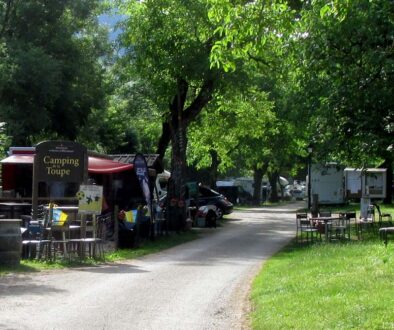
In more recent decades, Baume-les-Messieurs has become well-known as a tourist destination, thanks both to its natural environment (the reculée, caves, cascade) and its rich monastic heritage. (Jura Tourisme)
The village is recognized as one of the association Les Plus Beaux Villages de France. (Wikipedia)
The abbey retains its religious function (the church is still in use) and hosts cultural events (for example a baroque music festival) and guided visits. Preservation efforts continue (see Fondation du Patrimoine-supported projects). (fondation-patrimoine.org)
Conservation of the natural setting (Natura 2000 protection of the high Seille valleys) complements heritage protection. (Lons-le-Saunier Tourisme)
Tourism today is both an opportunity and a challenge — managing visitor flows in a small village in a sensitive landscape. (combatlemedia.com)

Summary Timeline
-
Prehistoric Era: occupation of the site (Neolithic, Gallo-Roman remains).
-
Late 6th century (traditional): Establishment of a monastic cell by St Columbanus (legend).
-
9th century (~888-890): Resurgence of the monastery under Abbot Bernon; document mention 869 of cella Baume.
-
910: Bernon departs with monks to found Cluny — Baume plays role in Cluniac reform.
-
11th century: Major building period of abbey; growth in monastic wealth and influence.
-
1147: Abbey placed under Cluny’s authority.
-
1157: Title “Abbey Imperial” granted.
-
14th-15th centuries: Fires, pillaging, Gothic rebuilding; commencement of decline.
-
16th-17th centuries: Commendatory abbots, secular pressures, further decline.
-
1759: Secularisation of abbey; monks replaced by canons; name shift to Baume-les-Messieurs.
-
1790s: French Revolution – dissolution of monastic chapter, sale of buildings.
-
19th century: Heritage recognition, Monument Historique listing (1849, 1862).
-
20th-21st century: Cultural revival, tourism, heritage and nature protection.
Significance & Legacy
Baume-les-Messieurs is significant for several reasons:
-
It embodies the interplay of natural landscape and monastic settlement: the remote, dramatic Jura cirque provided the setting for a major medieval abbey.
-
It was directly connected to the founding of Cluny, one of the most important monastic reform movements in Europe — thereby linking this small valley with broader European ecclesiastical history.
-
Architecturally, the abbey church and monastic complex include Romanesque, Gothic and later elements; the site contains high-quality sculpture (tombs, retables) including the remarkable 16th-century Flemish (Anversian) retable. (Jura Tourisme)
-
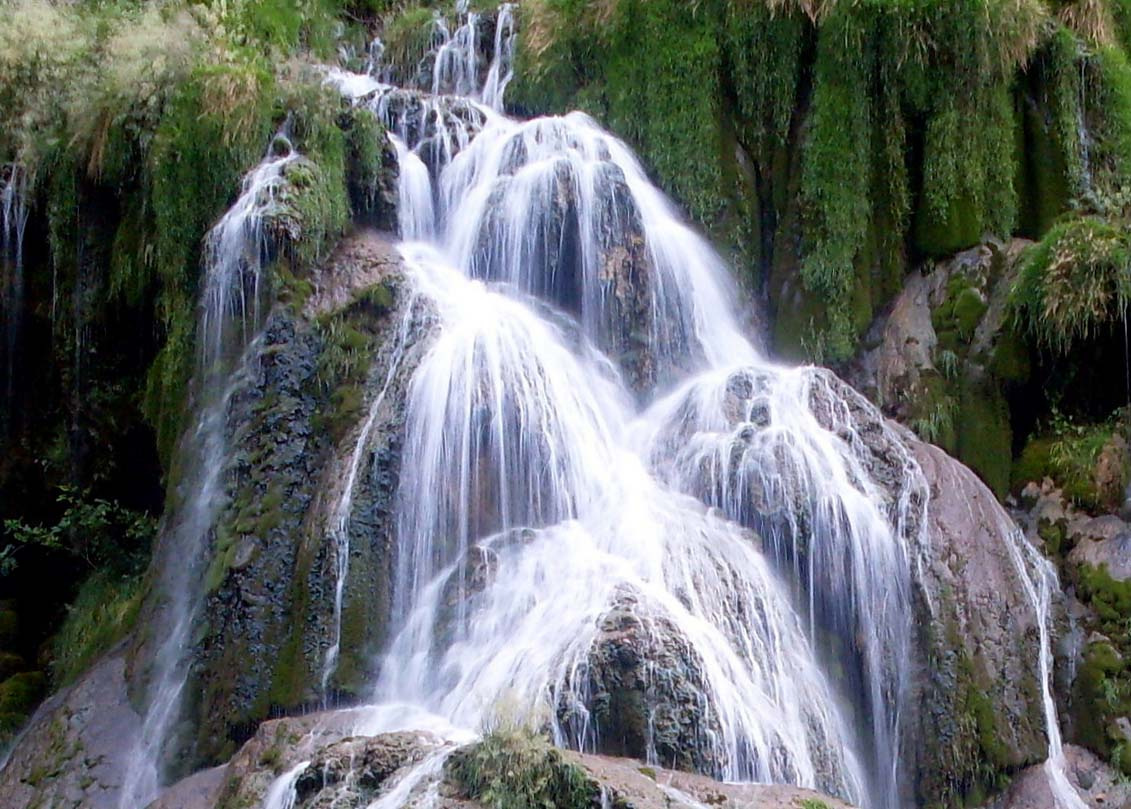
The natural setting — the reculée, caves, cascade of tufa — adds a dimension of geological and environmental importance, making the site a double-heritage asset (cultural + natural).
-
For the region, it is a key tourist destination and a symbolic small community maintaining heritage, landscape and identity.
Current Challenges & Future Directions
Today, challenges include balancing tourism with conservation: the village’s small scale (only a few hundred inhabitants) means infrastructure, visitor management and preservation must be carefully handled. (Jura Tourisme)
Architectural conservation remains ongoing: private ownership of many buildings (former monastic buildings) complicates unified restoration. Funding (e.g., via foundations) is in place but long-term maintenance is demanding. (fondation-patrimoine.org)
Environmental protection (of the cliffs, grottos, tufa cascade) requires vigilance — climate change, visitor pressure and other factors could affect the fragile natural systems.
In terms of heritage interpretation, continued research (archaeological excavations in the abbey revealed earlier phases) adds to the understanding of the site. (juramusees.fr)